
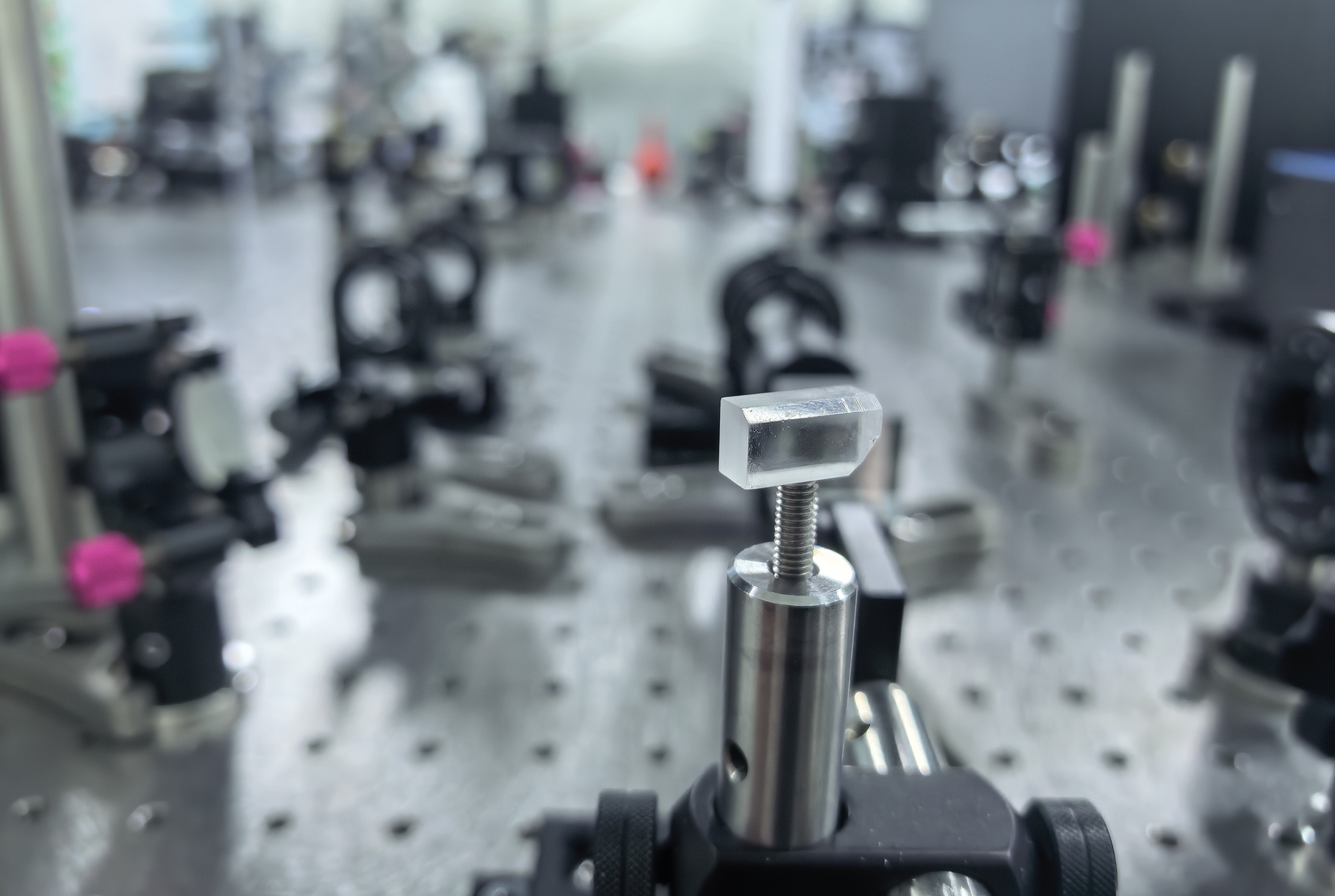
A research team led by Prof. PAN Shilie at the Xinjiang Technical Institute of Physics and Chemistry of the Chinese Academy of Sciences has developed the fluorooxoborate crystal NH4B4O6F (ABF)—offering aneffective solution to the practical challenges of VUV NLO materials.
A research team from the Xinjiang Technical Institute of Physics and Chemistry of the Chinese Academy of Sciences has developed a novel Hg-based chalcogenide HGSC—featuring linear [Hg3Se2] building units. The team systematically investigated the crystal's structure, optical properties, and thermal response behavior.
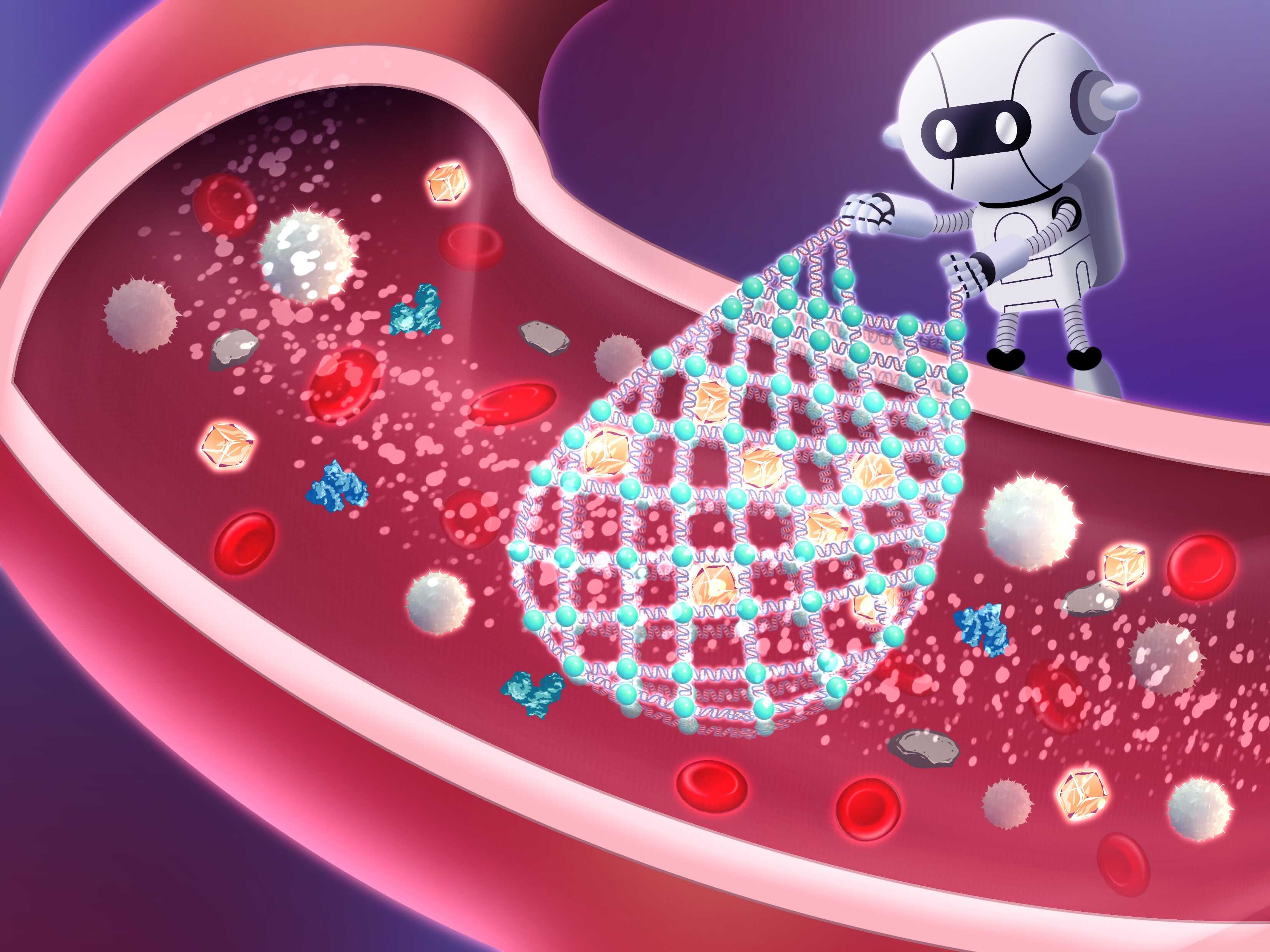
A research team led by Prof. WANG Hongzhi from the Hefei Institute of Physical Science of the Chinese Academy of Sciences has developed a dual-functional sensor chip called PlasmoBridge, which bridges plasmonic nanoparticles using aptamer molecules.
Prof. GUO Guocong and Prof. LIU Binwen from the Fujian Institute of Research on the Structure of Matter of the Chinese Academy of Sciences proposed a strategy which achieves PM in infrared NLO materials by amplifying birefringence through anisotropic lattice distortion.
A team led by Prof. TAN Weihong and Prof. QIU Liping from Hangzhou Institute of Medicine of Chinese Academy of Sciences, along with Prof. XU Haoxing from Zhejiang University, developed ratiometric DNA nanodevices stably anchored on the cytosolic leaflet membranes of lysosomes, which can quantitatively measure pHjx-LY in live cells.
A research team from the Xinjiang Technical Institute of Physics and Chemistry of the Chinese Academy of Sciences, has proposed a novel structural design strategy based on the synergistic assembly of fluorinated polyhedra and planar B–O groups. By harnessing the "shearing" effect and directional polymerization capability of fluorinated polyhedra, the team realized the uniform alignment of π-conjugated functional units, leading to the successful synthesis of a series of alkali metal fluoroborates, namely KABF, RABF, and CABF.

86-10-68597521 (day)
86-10-68597289 (night)

52 Sanlihe Rd., Xicheng District,
Beijing, China (100864)
Copyright © 2002 - Chinese Academy of Sciences


